
In modern electronics manufacturing, component inventory is closely connected to production efficiency. SMT factories may manage thousands of reels containing resistors, capacitors, ICs, connectors, and other surface-mount components. Knowing exactly how many parts remain on each reel is important for production planning, material allocation, replenishment, and cost control.
Manual counting is slow and can introduce errors, while conventional mechanical counting methods may require operators to unwind or otherwise handle the reel. For this reason, automated X-ray counting has become an increasingly valuable solution for electronics manufacturers.
An X-ray reel counter can estimate the quantity of components inside a sealed SMT reel without opening the packaging or physically removing the components. Seamark ZM develops X-ray-based component counting equipment designed for SMT material management, with solutions intended for applications ranging from incoming inspection to warehouse inventory control.
An SMT production line can consume thousands or even millions of components every day. Small discrepancies between theoretical inventory and actual inventory can accumulate quickly.
For manufacturers, component counting affects several operational activities:
Incoming material verification
Warehouse inventory management
SMT line preparation
Material kitting
Production replenishment
Partial-reel management
Customer return verification
Scrap and consumption analysis
A reliable SMT parts counter provides a faster way to determine the remaining quantity of components without relying entirely on manual estimation.
This becomes especially important for expensive ICs, fine-pitch devices, and partially used reels, where even a small counting error can affect material availability and production planning.
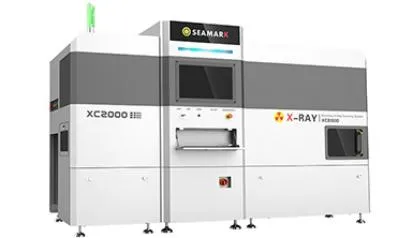
An X-ray counting system uses penetrating radiation to create an image of the components inside a reel. Software then analyzes the image and calculates the number of parts based on their arrangement and physical characteristics.
Unlike manual counting, the operator does not need to remove the components from the carrier tape. The original reel can remain intact during the counting process.
A typical automated workflow includes:
Reel loading → X-ray imaging → image processing → component recognition → quantity calculation → result storage
Modern systems can use machine-learning or AI-based algorithms to improve recognition of different component arrangements.
The major advantage is that the SMT component reel counter transforms a traditionally repetitive warehouse task into a measurable digital process.
Manufacturers can use several methods to determine the number of components remaining on a reel. The appropriate technology depends on component type, accuracy requirements, production volume, and material-handling procedures.
A conventional mechanical reel counter may count components as the tape passes through a sensor or counting mechanism. This can work well for certain production environments but may require tape movement.
Weight-based counting estimates quantity from the total weight of the reel and known component weight. It can be useful for high-volume passive components but may become less reliable when individual component weight varies or the remaining quantity is low.
X-ray counting provides another approach by imaging the actual contents of the reel. It is particularly useful when manufacturers want non-destructive counting without opening packaging or feeding the carrier tape through a mechanical system.
For large SMT operations, X-ray technology can therefore complement rather than completely replace other counting methods.
An industrial SMD reel counter machine needs to provide more than basic counting functionality.
Manufacturers should consider:
Supported reel diameters
Supported component sizes
Counting accuracy
X-ray source characteristics
Detector resolution
Image-processing algorithms
Counting speed
Operator interface
Barcode or QR-code identification
Data storage
MES/ERP/WMS connectivity
Radiation safety
Maintenance requirements
For example, Seamark ZM's XC1000 X-ray SMD reel counter is designed for offline SMT component counting. According to the manufacturer's published information, it supports reel sizes from 7 to 15 inches and components from 01005 upward. The system also supports data integration with manufacturing and warehouse-management platforms.
These characteristics are important when the counter needs to operate as part of a structured material-management system rather than as a standalone counting device.
An SMD counter machine can be deployed at several stages of the manufacturing process.
When reels arrive from suppliers, manufacturers can use automated counting to verify quantities against purchase orders and supplier documentation.
This can help identify discrepancies before materials enter production inventory.
For partial reels, the actual remaining quantity may differ from the original quantity recorded in the ERP system. Regular counting can help maintain more accurate inventory records.
This is particularly useful in high-mix manufacturing environments where thousands of different part numbers may be stored.
Before production begins, operators need to prepare the required materials for a specific work order.
An SMD component counter can verify reel quantities during kitting, reducing the risk of sending insufficient materials to the production line.
After production, partially used reels can be counted before returning them to storage. The measured quantity can then be updated in the inventory system.
This creates a more accurate connection between physical material consumption and digital inventory records.
Modern SMT assembly increasingly uses miniature components such as 0201, 01005, and other fine-pitch devices. Manually counting these components is impractical.
A high-resolution X-ray-based SMD chip counter can determine quantities without requiring technicians to handle individual components.
This can be particularly valuable for passive components and small semiconductor devices stored on carrier tape.
However, manufacturers should validate equipment performance using their actual component types. Component shape, tape configuration, spacing, material, and packaging can influence image recognition and counting accuracy.
A factory should therefore test representative reels before final equipment selection.
The value of an SMT counter increases when counting information can be connected to the factory's digital systems.
A modern material-management workflow may look like this:
Barcode identification → X-ray counting → quantity confirmation → ERP/MES update → warehouse record → production consumption tracking
This approach reduces the amount of manual data entry and can help synchronize physical inventory with digital records.
For high-mix EMS factories, the benefit is particularly significant. Instead of relying on handwritten notes or manual spreadsheet updates, operators can create a standardized record for each reel.
The resulting data can support inventory audits, material planning, production scheduling, and customer reporting.
Manufacturers should avoid treating X-ray counting as a simple "number recognition" problem. Counting accuracy depends on both hardware and software.
Important factors include image resolution, component geometry, tape spacing, reel diameter, component orientation, image-processing algorithms, and environmental conditions.
A professional SMD component counter should provide repeatable results across different component types and reel configurations.
Factories should establish verification procedures as well. High-value components may require periodic manual verification or sampling to confirm system performance.
The objective is not merely to obtain a number but to establish a reliable and auditable material-control process.
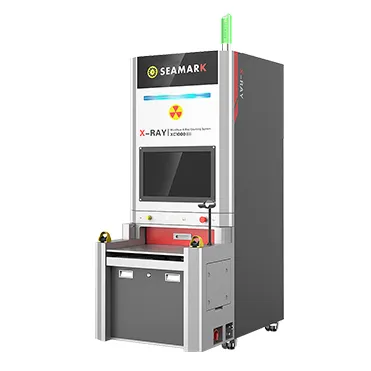
Because an X-ray reel counter generates ionizing radiation, safety should be an important part of the equipment-selection process.
Industrial users should evaluate cabinet shielding, safety interlocks, warning indicators, emergency controls, leakage-radiation specifications, and applicable local regulations.
Operators should receive appropriate training, and the equipment should be installed and maintained according to the manufacturer's instructions and relevant regulatory requirements.
Certification should also be evaluated carefully. Buyers should confirm the exact certification status of the selected configuration rather than assuming that every model or regional version has identical approvals.
For companies operating formal quality systems, equipment maintenance, calibration or verification records, operator training, and inspection procedures should also be documented.
Selecting the right SMD reel counters begins with the factory's actual material profile.
Manufacturers should determine the range of reel sizes, component dimensions, typical daily counting volume, required accuracy, and desired integration with existing software systems.
For smaller factories, a basic counting solution may be sufficient. High-volume EMS manufacturers may benefit more from automated identification, AI-assisted counting, barcode recognition, and MES/ERP/WMS integration.
Seamark ZM's X-ray reel-counting solutions are designed for industrial SMT material-management applications where non-destructive counting and digital traceability are important.
The key is to evaluate the complete workflow rather than purchasing a machine based solely on its nominal counting speed. A system that integrates smoothly into receiving, warehousing, kitting, and production-return procedures can deliver considerably more value than a standalone counter.
An X-ray reel counter is a machine that uses X-ray imaging and software algorithms to determine the quantity of SMD components inside a carrier tape reel without opening or unwinding the reel.
Accuracy depends on the X-ray system, detector resolution, component characteristics, tape configuration, and counting algorithm. Manufacturers should validate accuracy using representative reels from their own inventory.
Some high-resolution X-ray counting systems are designed to count very small components. Seamark ZM's XC1000 is specified for components from 01005 upward, but actual performance should be verified for the customer's specific component packaging and reel configuration.
X-ray counting is a non-destructive inspection method, so the reel does not need to be opened or physically unwound for counting. Manufacturers should nevertheless operate the equipment according to the specified procedures.
A mechanical counter generally determines quantity by detecting components as the tape moves through the counting mechanism. An X-ray counter can image the components inside the reel and calculate the quantity without requiring the reel to be unwound.
Some industrial systems support integration with MES, ERP, WMS, or other factory-management systems. The exact interfaces and supported protocols should be confirmed for the selected equipment and factory software environment.
X-ray counting provides a non-destructive method for determining the quantity of components inside a reel. It can reduce manual handling and is particularly useful for partial reels and very small SMD components.
Key considerations include reel size, component size, counting accuracy, counting speed, X-ray resolution, software, barcode identification, data integration, radiation safety, maintenance, certifications, and after-sales technical support.
 EN
EN
 es
es  ko
ko  de
de  it
it  pt
pt  th
th  ar
ar  pl
pl  vi
vi  tr
tr  ru
ru