
BGA repair is often associated with the rework station itself, but the performance of a rework system also depends heavily on the accessories installed around the heating and placement process. Heating elements, infrared heaters, nozzles, and thermal components directly influence how heat is transferred to the PCB and component.
For electronics manufacturers, EMS providers, repair centers, and engineering laboratories, selecting compatible accessories is therefore not simply a maintenance task. It is part of process optimization. The right accessory can help achieve more uniform heating, improve thermal control, reduce unnecessary heat exposure, and adapt a standard workstation to different PCB and IC requirements.
Seamark ZM provides a range of accessories for its BGA rework equipment, including top and bottom heaters, IR heaters, top and bottom nozzles, and heating bricks. The company also supports customization for specific BGA and IC applications.
A professional BGA rework station must handle components with different package sizes, PCB thicknesses, thermal masses, and soldering requirements. A fixed heating configuration may not provide the same results for every application.
Accessories allow manufacturers to adapt the thermal system to the job.
For example, the heating area required for a large BGA on a multilayer motherboard is very different from that required for a small fine-pitch package. Similarly, a component surrounded by heat-sensitive devices may require more localized heating than a relatively open PCB area.
The accessory configuration can therefore affect:
Heating speed
Temperature uniformity
Heat concentration
Thermal exposure of surrounding components
Solder melting behavior
Rework repeatability
Component compatibility
Operator efficiency
This makes accessories an important part of the overall BGA rework systems strategy.
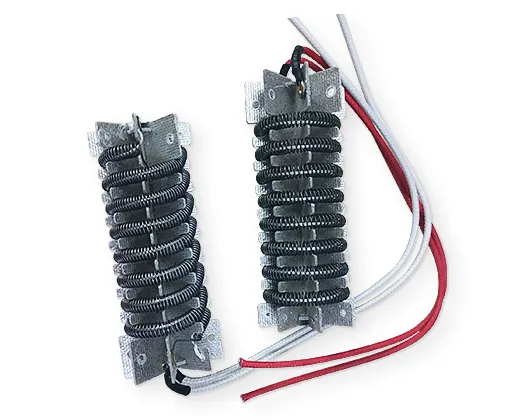
Top and bottom heating elements are among the most important accessories for a rework process.
A top heater delivers energy toward the component being removed or installed, while a bottom heater can provide preheating from underneath the PCB. Using both heating directions can help establish a more controlled thermal environment.
Seamark ZM offers separate top and bottom heaters using heating wire designed for high-temperature and oxidation-resistant operation. The heaters are compatible with a variety of the company's BGA rework machines.
For multilayer PCBs, bottom heating can be particularly valuable because the board may have substantial thermal mass. Without sufficient preheating, the upper heating system may need to operate more aggressively to bring the solder joint to reflow temperature.
A balanced top-and-bottom configuration can reduce excessive temperature gradients and support a more predictable rework profile.
An infrared BGA rework station uses infrared energy to transfer heat to the work area. Infrared heating can be useful when a manufacturer needs rapid and relatively uniform heat transfer across a defined area.
Seamark ZM's accessory portfolio includes an IR heater based on a carbon-fiber heating tube. The manufacturer describes the heater as providing rapid heating, uniform heating, and fast heat exchange.
An IR BGA rework station can be particularly useful for applications involving larger PCBs or components where localized heating alone may not provide sufficient thermal balance.
However, infrared heating should not be selected simply because it is faster. Engineers should evaluate the PCB material, copper distribution, component density, package size, and required temperature profile.
The objective is controlled energy transfer rather than maximum heating speed.
Nozzles are another critical component of BGA rework equipment.
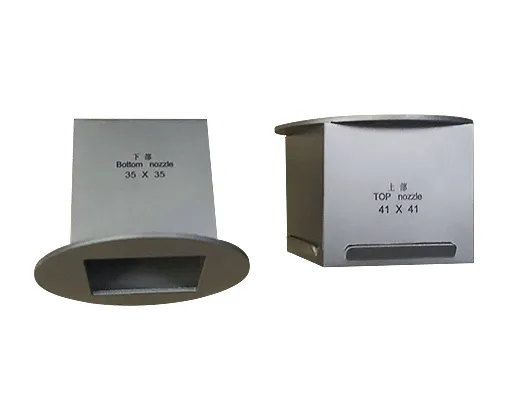
A nozzle directs heating toward the target component and helps control the area exposed to hot air or other thermal energy. Selecting an inappropriate nozzle can result in excessive heat spreading, insufficient heating, or unnecessary thermal exposure of nearby components.
Seamark ZM's top and bottom nozzles are designed for chip repair. The company states that the nozzle can concentrate temperature around the upper portion of the chip, helping limit heat spreading and facilitate solder-ball melting. Nozzle dimensions can also be customized according to the IC being processed.
For manufacturers handling different BGA packages, this flexibility can be important.
A nozzle should ideally match the package dimensions closely enough to provide effective heating without unnecessarily covering surrounding components. In production environments, standardized nozzle selection can also help operators reproduce validated processes more consistently.
When choosing accessories for a BGA rework station, manufacturers should start with the actual component rather than the machine model alone.
Important considerations include:
The nozzle should be compatible with the length and width of the BGA package. Oversized nozzles may heat surrounding components unnecessarily, while undersized nozzles may produce an uneven thermal profile.
Different packages may require different nozzle geometries and working distances. Mechanical clearance should be checked before installation.
A densely populated PCB requires more precise heat control than an open board. Components located close to the BGA may limit the practical heating area.
The solder alloy, target reflow temperature, and thermal profile should also be considered. Accessory selection must support the validated process rather than work against it.
For high-volume manufacturing, the accessory should provide consistent results across repeated repair cycles. Standardized configurations are easier to document, train, and validate.
A heating brick is another accessory used in BGA rework applications. It provides thermal conduction and can contribute to the heating performance of the rework setup.
Seamark ZM specifies its heating brick as having fast heat conduction and compatibility with its BGA rework stations.
In practical production environments, thermal accessories such as heating bricks can be selected according to the board structure and heating strategy. They may be especially relevant when engineers need to improve thermal transfer or maintain a more stable temperature distribution.
Rather than treating such components as generic consumables, manufacturers should consider them as part of the machine's thermal architecture.
Not every factory requires the same level of automation.
Seamark ZM's product range includes manual, semi-automatic, and fully automatic BGA repair equipment. Its product portfolio also includes infrared, optical-alignment, hot-air, and large-board configurations.
Accessory requirements can therefore vary with the workstation.
A manual repair environment may prioritize flexible nozzles and easily replaceable heating elements. A semi-automatic system may require more standardized accessory configurations. In an automatic BGA rework station, accessory compatibility becomes even more important because the thermal and mechanical process needs to remain repeatable across programmed cycles.
For automated production, manufacturers should document the approved accessory configuration as part of the machine recipe or process specification.
Heating elements and nozzles should not necessarily be replaced on a fixed calendar schedule. Their service life depends on operating temperature, usage frequency, contamination, mechanical handling, and the specific process environment.
Signs that an accessory may require inspection or replacement include:
Slower-than-normal heating
Uneven temperature distribution
Unexpected changes in thermal profiles
Visible oxidation or damage
Poor solder melting behavior
Increased rework failure rates
Physical deformation of nozzles
Inconsistent results between repeated repairs
For production facilities, preventive maintenance is preferable to waiting for an accessory failure to interrupt the repair process.
Temperature-profile verification should also be considered after replacing important heating components.
One of the challenges faced by B2B electronics manufacturers is that PCB assemblies are rarely identical. Automotive control boards, communication equipment, industrial controllers, consumer electronics, and server hardware can require different thermal approaches.
This is why customization can be valuable.
Seamark ZM states that its BGA rework accessories can be customized, including nozzle sizing according to IC requirements.
For manufacturers purchasing accessories from an accessories rework company, compatibility should be confirmed before ordering. The correct machine model, component dimensions, heater configuration, nozzle geometry, electrical specifications, and installation requirements should all be checked.
Using an accessory simply because it physically fits the machine does not guarantee that it is appropriate for the intended thermal process.
BGA rework accessories operate at elevated temperatures and should be managed as part of the equipment's safety system.
Manufacturers should establish procedures for heater replacement, nozzle installation, cleaning, inspection, and electrical isolation during maintenance. Operators should also be trained to recognize abnormal heating behavior.
For regulated or high-reliability manufacturing, process documentation should identify the approved heater, nozzle, thermal profile, and inspection method for each relevant BGA package.
If a validated process is changed—for example, by replacing a nozzle with a substantially different geometry—the thermal profile should be rechecked rather than assuming that the original settings remain valid.
This approach helps connect equipment maintenance with manufacturing quality assurance.
The performance of a BGA rework station should be evaluated as a complete system rather than as a machine alone.
Heating elements establish the thermal foundation. IR heaters can provide controlled energy transfer for suitable applications. Nozzles determine how heat is concentrated around the target package, while heating bricks can contribute to thermal conduction.
Together, these accessories allow manufacturers to adapt the workstation to different boards and components.
Seamark ZM's accessory portfolio covers top and bottom heaters, IR heaters, top and bottom nozzles, and heating bricks, with customization available for specific applications.
For B2B users, the most effective approach is to select accessories based on validated thermal requirements, component geometry, PCB design, production volume, and maintenance strategy—not simply on the lowest replacement cost.
A BGA rework station is specialized equipment used to remove, replace, and solder BGA components on printed circuit boards. Professional systems can provide controlled heating, alignment, and temperature monitoring.
Common accessories include top and bottom heaters, IR heaters, heating nozzles, and heating bricks. The exact configuration depends on the machine and the PCB or IC being processed.
A properly sized nozzle helps concentrate heat on the target BGA while limiting unnecessary heating of surrounding components. It can therefore influence thermal uniformity and rework consistency.
Yes. Seamark ZM states that its nozzle sizes can be customized according to the IC chip being processed.
An IR system transfers heat primarily through infrared radiation, while a hot-air system uses heated airflow. The better choice depends on PCB size, component layout, thermal mass, and the required heating profile.
There is no universal replacement interval. Heater condition should be evaluated according to usage, operating temperature, visible wear, heating performance, and changes in measured thermal profiles.
Not necessarily. Automatic equipment can improve repeatability and reduce operator dependence, but manual or semi-automatic equipment may be more appropriate for low-volume repair, prototyping, laboratories, or applications requiring frequent process changes.
Manufacturers should confirm machine compatibility, electrical specifications, physical dimensions, component size, thermal requirements, and installation procedures. After changing important heating components, the thermal profile should also be revalidated.
 EN
EN
 es
es  ko
ko  de
de  it
it  pt
pt  th
th  ar
ar  pl
pl  vi
vi  tr
tr  ru
ru